Nick’s Notes: As always we here at AW take a variety of perspectives on anti-work. We are pretty open in general to share anti-work sentiments so long as they are genuine and make good points.
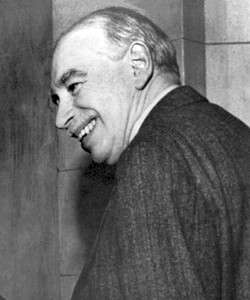
John Maynard Keynes
Keyne’s is (sort of) well known for advocating or at least seeing in the future more time for leisure and less time dedicated to work.
This comes from his Economic Possibilities for Our Grandchildren (1930).
There’s quite a few choice quotes to highlight.
One of the first being what Keynes sees as the key to all of this happening:
At the same time technical improvements in manufacture and transport have been proceeding at a greater rate in the last ten years than ever before in history. In the United States factory output per head was 40 per cent greater in 1925 than in 1919. In Europe we are held back by temporary obstacles, but even so it is safe to say that technical efficiency is increasing by more than 1 per cent per annum compound. There is evidence that the revolutionary technical changes, which have so far chiefly affected industry, may soon be attacking agriculture. We may be on the eve of improvements in the efficiency of food production as great as those which have already taken place in mining, manufacture, and transport. In quite a few years-in our own lifetimes I mean-we may be able to perform all the operations of agriculture, mining, and manufacture with a quarter of the human effort to which we have been accustomed.
What will the future look like?
Thus for the first time since his creation man will be faced with his real, his permanent problem-how to use his freedom from pressing economic cares, how to occupy the leisure, which science and compound interest will have won for him, to live wisely and agreeably and well.
The strenuous purposeful money-makers may carry all of us along with them into the lap of economic abundance. But it will be those peoples, who can keep alive, and cultivate into a fuller perfection, the art of life itself and do not sell themselves for the means of life, who will be able to enjoy the abundance when it comes.
But Keynes was very much aware that this future was not free of obstacles
Yet there is no country and no people, I think, who can look forward to the age of leisure and of abundance without a dread. For we have been trained too long to strive and not to enjoy. It is a fearful problem for the ordinary person, with no special talents, to occupy himself, especially if he no longer has roots in the soil or in custom or in the beloved conventions of a traditional society. To judge from the behaviour and the achievements of the wealthy classes to-day in any quarter of the world, the outlook is very depressing! For these are, so to speak, our advance guard-those who are spying out the promised land for the rest of us and pitching their camp there. For they have most of them failed disastrously, so it seems to me-those who have an independent income but no associations or duties or ties-to solve the problem which has been set them.
But what about those who still want to do work?
Keynes explains:
Of course there will till be many people with intense, unsatisfied purposiveness who will blindly pursue wealth-unless they can find some plausible substitute. But the rest of us will no longer be under any obligation to applaud and encourage them. For we shall inquire more curiously than is safe to-day into the true character of this “purposiveness” with which in varying degrees Nature has endowed almost all of us. For purposiveness means that we are more concerned with the remote future results of our actions than with their own quality or their immediate effects on our own environment. The“purposive” man is always trying to secure a spurious and delusive immortality for his acts by pushing his interest in them forward into time. He does not love his cat, but his cat’s kittens; nor, in truth, the kittens, but only the kittens’kittens, and so on forward forever to the end of cat-dom. For him jam is not jam unless it is a case of jam to-morrow and never jam to-day. Thus by pushing his jam always forward into the future, he strives to secure for his act of boiling it an immortality.


Pingback: Breaking Smart by Breaking Work - Abolish Work